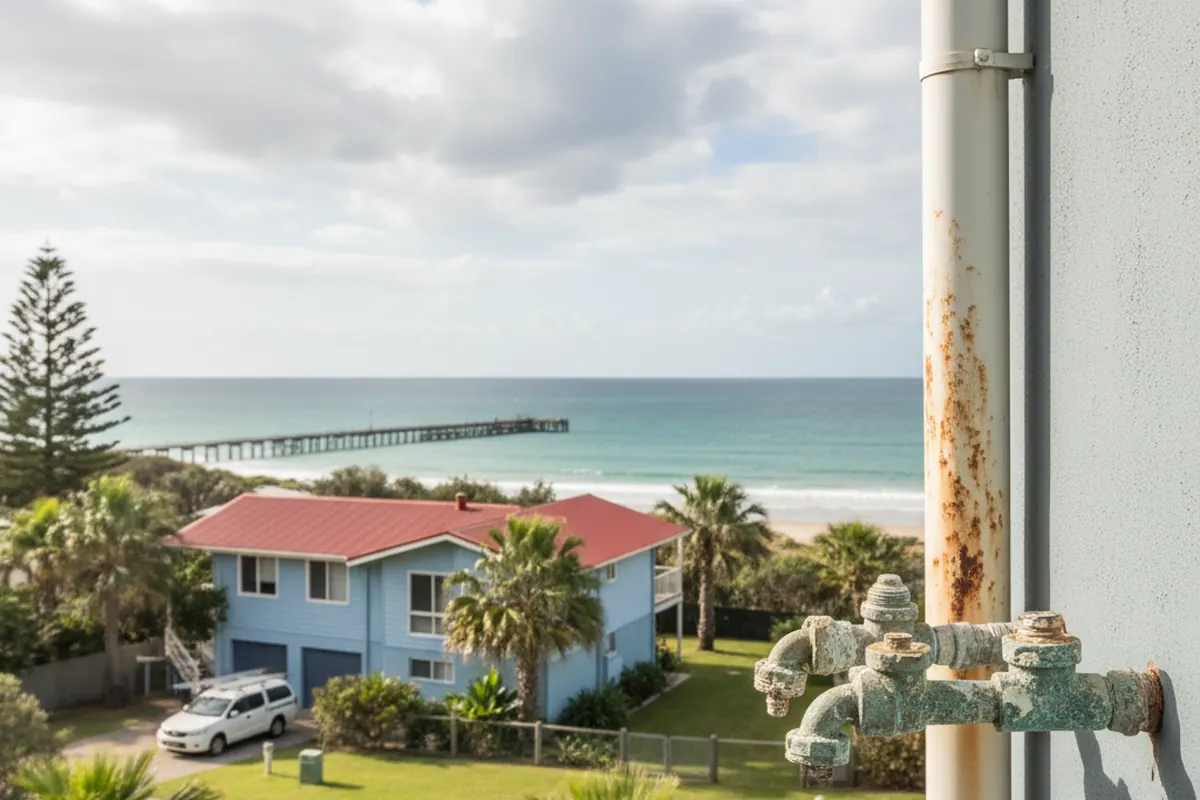
The Fraser Coast's salt air is great for the view and rough on your plumbing. Stainless steel that lasts 20 years in Brisbane might give up in 8 here. Knowing what corrodes and what doesn't saves you a lot of money over the long term.
What corrodes fastest
Chrome-plated brass tapware is the first thing to go. The chrome flakes off and the brass underneath pits. Cheap mixer tapware (under $80 each) often fails in 3-4 years in coastal Hervey Bay. Better quality mixers ($200-$400 each) using marine-grade stainless internals last 10-15 years.
Hot water tank bodies are next. Painted steel tanks rust through within a decade of beachside install. Stainless steel tanks last much longer but cost about 50% more upfront.
Outdoor taps and garden tap fittings near the boundary corrode quickly because they're exposed to the worst of the salt spray. Replace the spindle and washer assembly every couple of years if you want them to keep working smoothly.
What lasts
Copper pipe inside the wall cavity is unaffected by salt air. PEX (cross-linked polyethylene) is also fine. Brass fittings inside the wall last decades. The corrosion problem is almost entirely about external exposure.
How to slow it down
For outdoor taps: a quick rinse with fresh water after a windy day helps. WD-40 or similar light oil on the spindles once a year keeps them turning smoothly. For your hot water tank, if it's outdoors and exposed, a simple corrugated iron shelter cuts salt exposure dramatically.
What to ask for when buying new fittings
Look for grade 316 stainless steel rather than 304. The marine-grade rating costs a bit more but lasts much longer in our climate. Solid brass internals beat plated finishes every time. WELS-rated tapware (3-star or above) often uses better internals as a side effect.
If you're not sure what's installed currently, we can do a quick walk-through and point out what's likely to need replacement in the next year or two. No charge for that, it's part of how we quote.